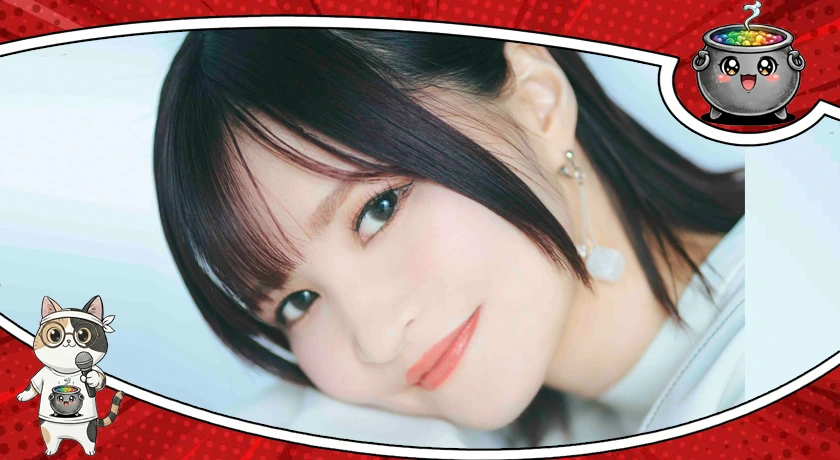
Have you ever wondered what the everyday life of a person who lends his voice to your favorite anime characters? As part of the "Catering Talks", the valued seiyū, Makoto Koichi, has lifted a secret about her professional path. One of the most talented Japanese actresses of the young generation talks about the challenges of the industry and what she thinks is the key to understanding the complex character. This material is particularly interesting for Japanese pop culture lovers.
This conversation is one of the few interviews conducted directly by the Polish medium with an active Japanese seiyū. Below we publish a record of a conversation in which Makoto Koichi brings the scenes of his work closer, tells about the approach to different roles and challenges of the industry.
Makoto Koichi is one of the more recognizable actresses of the young generation of Japanese dubbing. Its achievements include roles in productions such as: Tensei shitara Dainana Ouji Datta node, Kimama ni Majutsu wo Kiwamemasu (as Lloyd), Rurouni Kenshin: Meiji Kenkaku Romantan (2023) (as Yahiko Myojin) is Sekai Saikou no Ansatsusha, Isekai Kisoku ni Tensei suru (as young Lugh). The actress is found perfectly in various genres – from comedy Tomo-chan wa Onnanoko! (as young Junichiro) and Sanrio Danshi (as young Kouta), after production of fantasy, such as Sozai Saishuka no Isekai Ryokouki (as Blorite), Hataraku Maou-sama!! or the latest hits: Isekai Shikkaku and Shangri-La Frontier.
The talent of the actress is well known also to the community of players. Her voice creations can be heard in brands like Street Fighter 6, Monster Hunter: World, Assassin’s Creed Shadows and series Dragon Quest. In addition to working in a recording studio, the artist actively communicates with fans via social media – her current projects can be tracked on official profiles on the websites Twitter (X) and Instagram.

> What inspired you to become seiyū?
Makoto Koichi: It started from the moment when I was performing on stage in a "2.5D" performance, I began to study the role workshop characteristic of seiyū. It inspired me.
| Editorial note: "2.5D" – a term used in Japan for anime or manga adaptations in the form of theatrical performances that combine stage and animated elements. |
> What do you think is the hardest in this industry?
Makoto Koichi: The most difficult are auditions (castings). You have to keep winning castings that involve dozens or hundreds of people. You have to be remembered. I always put a lot of effort and excitement into it, wondering how best to play the role.
> Is there a type of character you particularly like to play?
Makoto Koichi: Every character makes me happy, I don't value them. But if you look at the roles I get most often, they are young boys. I have the opportunity to become boys of different ages and different characters.
| Editorial note: In Japanese dubbing, women often lend voice to young boys – this is a standard practice, allowing them to get the right tone of voice for children's characters. |
> How do you prepare for a new role?
Makoto Koichi: If the character is based on the source material (manga/light novel), I read it thoroughly and analyze the character's past (background) before entering work.
> Before you start recording, would you like to know the ending of the story, or would you rather be surprised at the development of events, like viewers?
Makoto Koichi: In principle, I prefer to understand the whole course of events, so I belong to people who read all the parts that have been released so far before the recording begins.
> Is there any element of your voice that you still grind or want to perfect?
Makoto Koichi: I want to continue grinding the boys' roles because that's my specialty. Recently, I have also been increasingly given roles in dubbing acting productions (films/serials) where hoarseness in my voice is used – this aspect I would also like to develop.
> How do you cope with a lot of text to master in a short time with several different projects at the same time?
Makoto Koichi: In the work of the voice actor we play with a ready-made script in hand, so it is rarely necessary to forge huge batches of material. When I was performing in the theater, I would record the issues of my interviewers, leave a break for my own people, and play a recording, learning through "ball bouncing" in dialogue.
> What are the main differences in working with dubbing anime and video games?
Makoto Koichi: In anime we have the image and the partners we talk to. The way they "give me a line" changes my acting game; it also makes it easier to feel the situation. The games are mostly recorded alone, so I talk, imagining partner issues and the whole scene in my head. I think that's the biggest difference.
> Was any of your previous characters the most difficult to understand emotionally?
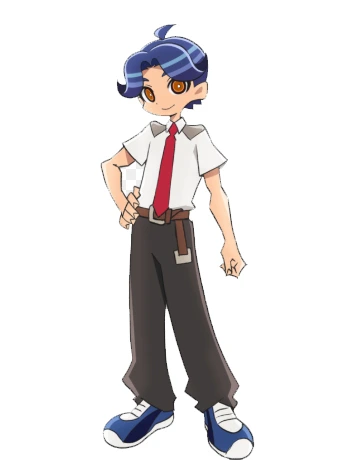
Makoto Koichi: It was.Rimiya Tsukishiro of Sousei no Aquarion Love. According to the assumptions, it was a character without empathy. I had to be honest with my emotions, but at the same time I couldn't change the tone of my voice under the influence of the conversation. It was a very difficult role, but it gave me a lot of fun.
> What emotion is the hardest to express in a voice, and why do you find it particularly demanding?
Makoto Koichi: One whose character doesn't show out, even though it's boiling inside. Every time I think about the right balance – how many of these emotions to "smuggle" to the voice.
> Is there one of the characters you played that you would like to be friends with in the real world?
Makoto Koichi: Nir of Isekai Shikkaku (No Longer Allowed in Another World). He is the youngest in the team, but in his orphanage he acts as an older brother – he is calm and able to bring others to order. I wish I could accompany him on his way to becoming a hero.
> Is there anything you would like to do, but so far you lack courage or time?
Makoto Koichi: I would like to study the film.
> What words would you like to address to Polish fans who follow your career?
Makoto Koichi: I'm so grateful that you're here to support me in our distance. Thank you very much! I will continue to put my whole heart into my acting game so that in Poland you can enjoy Japanese entertainment. I'm counting on your support!
| Editorial note: In the conversation, the actress emphasized that Poland is one of the countries that I have long wanted to visit. She expressed deep hope that in the future there would be an opportunity for a personal meeting with the local fandom. |
We hope that this conversation brought you closer to the workshop of one of the most interesting contemporary seiyū. I also encourage you to read the other interviews in the series "Cat talk"who regularly hosts acclaimed artists and artists associated with Japanese pop culture.