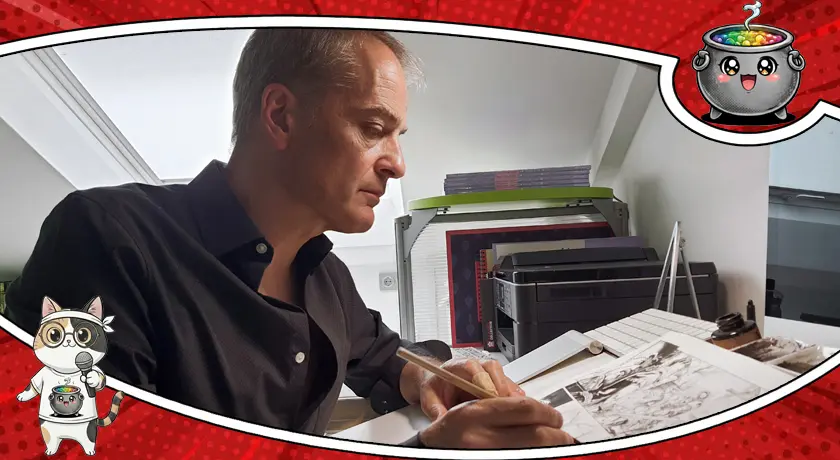
Juan Luis Landa is a creator who has been fascinated by history and comic books since childhood. In this interview he tells how passion for the Middle Ages turned into a professional career. You will find out what his daily work looks like, working with other creators and inspirations for subsequent projects. It's a mandatory reading for all comics fans and historical stories.
Juan Luis Landa is a Basque comic book artist who began his creative career by abandoning his career in the chemical industry for fascination with drawing and animation. For decades he developed a unique style based on extraordinary precision, making him one of the pillars of the European historical and realistic comic book. His greatest works include positions like Arthus Trivium, L’Ogre whether published in Poland by the publisher Lost in Time album Roncevaux Chronicles. His work is distinguished by the carefulness of details, historical fidelity and sense of the atmosphere of the era, which makes it unique. The artist is happy to share his work and inspiration into Instagram and his websitewhere you can track his designs. This interview is an opportunity to learn not only the scenes of the creation of his works, but also the reflections of the creators about history, the comic market and the artist's daily workshop.
Thank you for taking the time to answer my questions.
> Do you remember the moment when you decided to create comic books?
Juan Luis Landa: I remember that as a child I was fascinated by comic books for their ability to tell stories through drawings. I was maybe six or seven years old, but comic books like Tintin or Prince Valiant had already impressed me. Soon drawing and making my own stories became fun for me, but I never thought it would become my profession. Until 1984, an opportunity appeared to publish my first comic book in the Basque comic book Ipurbeltz. I was 18 at the time, and I never stopped drawing.
> How do you recall your transition from metallurgical chemistry to professional illustration in 1984? Did knowledge gained during your studies help you in any way during the making of comic books?
Juan Luis Landa: At the time in the Basque Country, the metallurgical industry was very developed and these studies gave a chance for stable work. After they were finished, I had an offer to work at a chemical company, but at the same time I was offered to participate in the first animated film in Basque. I didn't hesitate to pick the other option. I have never worked in a chemistry-related profession, but I also did not regret studying – it was not lost years. They helped me develop and mature as a man, which in a way affected my path as an author.
> Do you think the comic book is more appreciated today than when you started your career?
Juan Luis Landa: In the 1980s, the comic book experienced the beginning of a crisis which, in my opinion, continues with various ups and downs to this day. Although there were many comic magazines, considerably fewer publications were published proportionally than they are now. Today the competition is fierce, and the market is flooded with thousands of new ones every year. But paradoxically, the comic book was more valued decades ago. In my generation everyone was a comic book reader, and today, despite the excess of publications, that is no longer the case.
> Has the development of digital technologies affected your way of working?
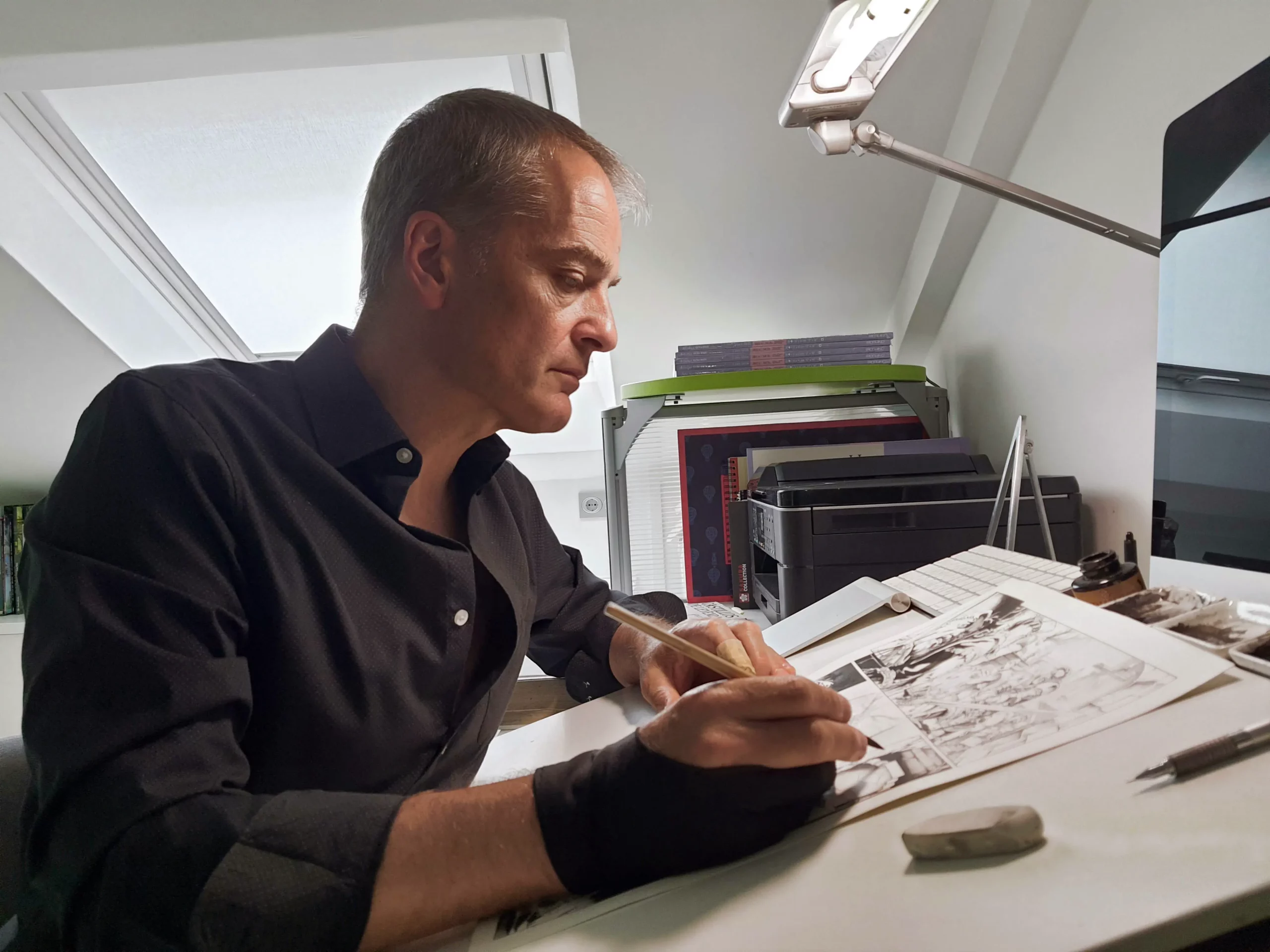
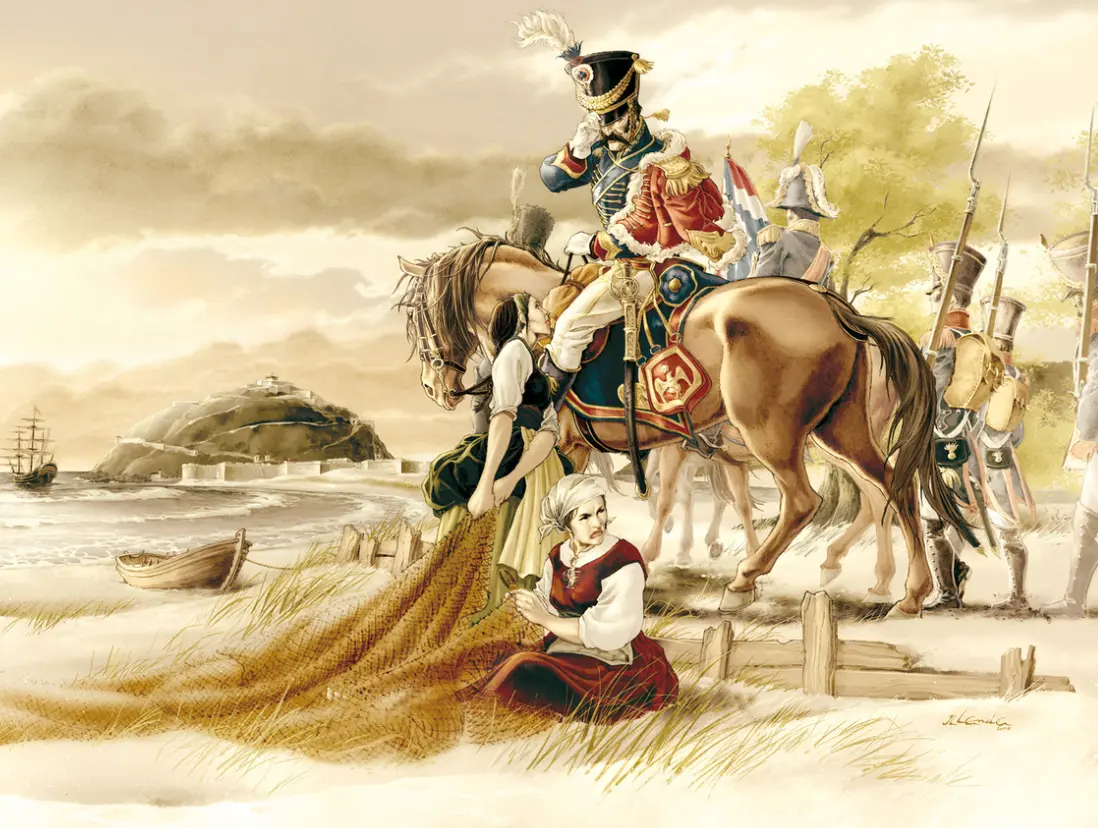
Juan Luis Landa: I'd say he changed his way of working, but not my style. The computer is basically just used for coloring drawings. My originals are black and white, entirely hand-drawn and refined. I always liked the paper touch, and my tools were Chinese ink, steel, brush, marker and pencil. I used to paint the originals with watercolors, but ever since the computers came out, for practical reasons, I've completely given up on them.
> What are the biggest differences between drawing comic books for the Spanish and Francophone markets?
Juan Luis Landa: I think there are virtually no differences at the moment. In recent decades, the Spanish market has decreased dramatically. As a result, Spanish releases no longer create many of their own publications, limiting themselves to the purchase of rights to international successes. The authors had to adapt to other markets, like American or Franco-Belgian, if they wanted to survive – and I think with great success.
> What did your work on the animated film at the beginning of your career look like, and how did it affect your later path as a comic book artist?
Juan Luis Landa: That was the beginning of my career. A short period, but very informative. I was young and my contact with experienced cartoonists made me very rich. I was gaining confidence and freedom in taking on further challenges. But soon I realized that I wanted to tell my own stories – the comic book format gave me real happiness. When the first opportunity came along, I returned to the comic book with new experience. I never went back to animation.
> How was the idea for the Roncevaux Kroniki comic?
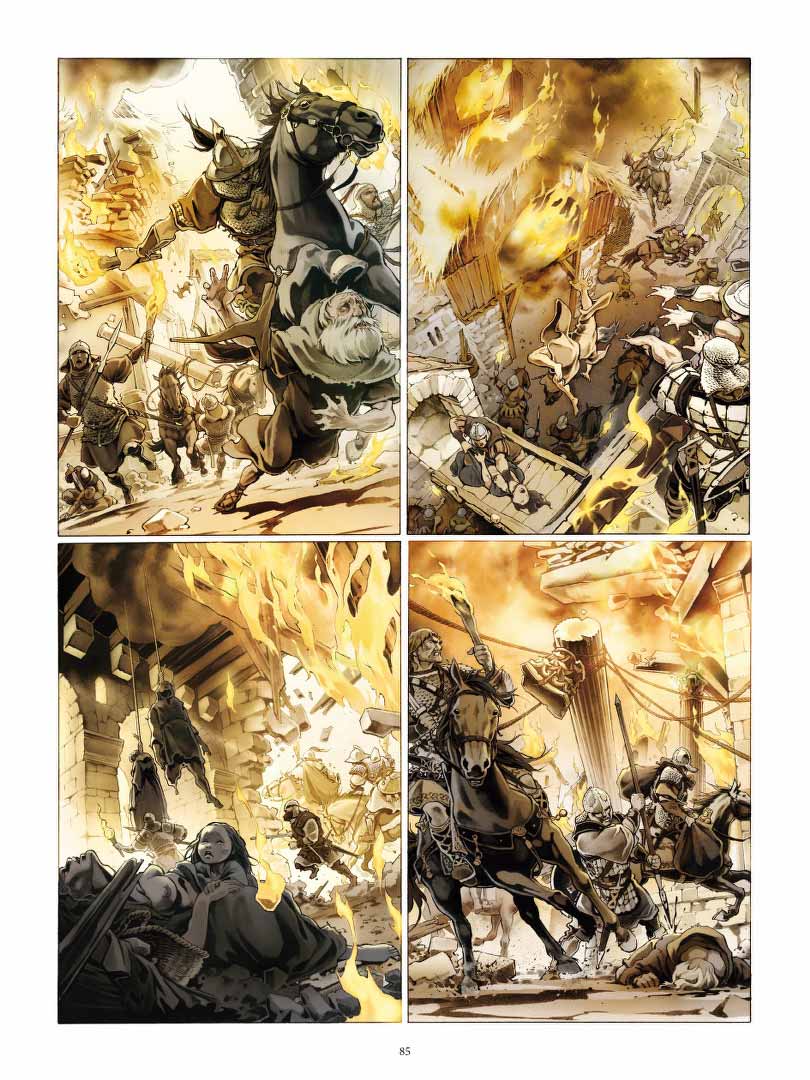
Juan Luis Landa: The axis of "Roncevaux Cronic" is a historic event that gave rise to a great medieval epic poem Song of Roland, or famous Battle of Roncesvalles. In this battle between the Franks and Basques, Charles the Great lost the best part of the army, including Roland – his best Paladin. After this event, which echoed widely throughout Europe, the emperor was never the same again. I've always been fascinated by the Middle Ages and the stories of small nations conquering great. As Bask, this event fascinated me from my youth – I felt the need to tell this story.
> Are there any staff from this story you are particularly proud of?
Juan Luis Landa: Not a single frame, a whole one. I always try to give the reader full experience – both in the drawing and in the script. In this case, I was very thorough in historical terms. I reached for sources, the chronicle of Charles the Great, the chronicle written in his lifetime. I wanted to move the reader to the 8th century – it was not easy. I was most satisfied with positive reviews, including those familiar with the subject, which praised historical credibility.
> What interests you most in the world of Arthus Trivium?
Juan Luis Landa: I always liked drawing historical comics. Arthus Trivium was more than just a new challenge to me. I had to plunge into the Renaissance era, creating a dark climate with a note of mystery and fantasy. The character scheme proposed by writer Raule – three young students working under the supervision of Master Nostradamus, similar to the famous television series "Charlie's Angels" – seemed very original and clever to me. Working on it was a lot of fun for me.
> Jean Dufaux is a true giant European comic book. When working on El Ogro, do you receive very restrictive descriptions of the staff, or as an experienced master of realism do you have full freedom to create drawings?
Juan Luis Landa: Na początku było powolnie. Trudno było mi ruszyć i nabrać tempa, bo w moim podziwie dla kariery Jeana nie chciałem go zawieść. Chciałem stworzyć coś godnego jego profesjonalizmu, co powodowało wątpliwości – głównie w kwestii koloru. Po ich rozwianiu wszystko stało się łatwe. Scenariusze Jeana w El Ogro są wspaniałe – opisuje akcję tak, aby moja wyobraźnia miała przestrzeń do działania. Jean szanuje rysownika, nie naciska – jest hojny i wdzięczny. Praca z nim to przyjemność.
> Jaką wizję Joanny d’Arc chce Pan przedstawić w El Ogro?
Juan Luis Landa: Myślę, że najlepiej odpowie na to Jean. Moim zdaniem chciał odejść od klasycznego, mistycznego wizerunku czystej bohaterki. Chce pokazać Joannę bardziej ludzką, silną, ale jednocześnie owianą tajemnicą pochodzenia. Chce reinterpretować mit w nowy sposób.
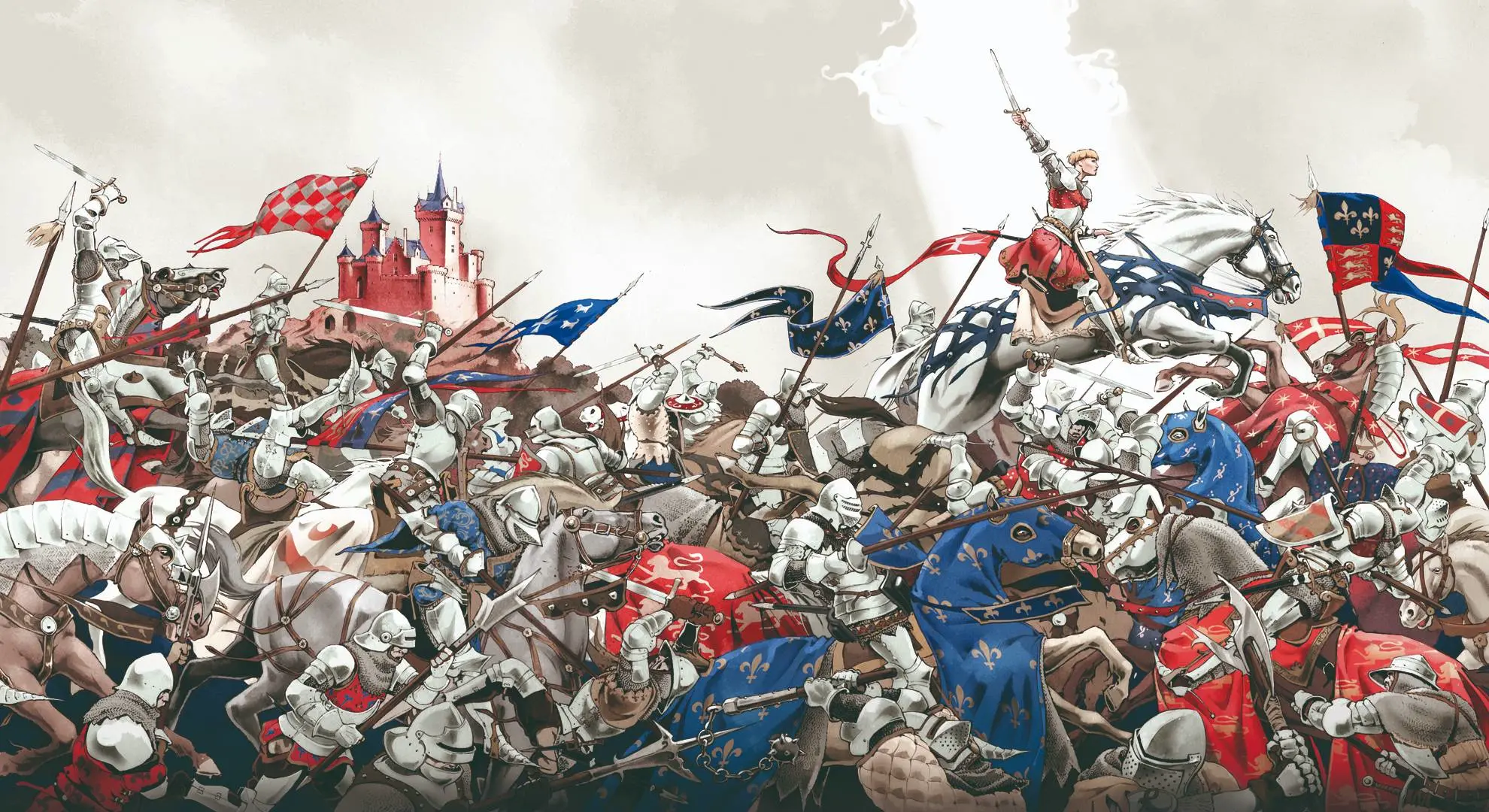
> Wielu czytelników widzi tylko gotowy album, ale rzadko zdaje sobie sprawę z tego, jak wygląda codzienna współpraca rysownika ze scenarzystą. Czy mógłby Pan opowiedzieć o jakiejś sytuacji z pracy nad komiksem, gdy scenariusz i wizja graficzna bardzo się od siebie różniły i musieliście znaleźć wspólny język?
Juan Luis Landa: Nie wiem, czy to częste wśród innych profesjonalistów. W moim przypadku rzadko – być może dlatego, że często sam byłem autorem scenariusza. Oczywiście zdarzają się różne wizje między wydawcą, scenarzystą a rysownikiem, ale na ogół panuje szacunek i akceptacja. Wspólny język rodzi się naturalnie, dla dobra końcowego efektu. Każdy autor przede wszystkim musi być sobą.
> Komiksy historyczne wymagają ogromnej ilości dokumentacji. Czy zdarzyło się Panu odkryć w trakcie researchu jakiś mało znany fakt historyczny, który postanowił Pan wykorzystać w komiksie?
Juan Luis Landa: Nie do końca. Raczej fascynuje mnie sama archeologia i historia, zwłaszcza średniowiecze, i to właśnie zainspirowało mnie do poświęcenia życia temu gatunkowi. Podczas badań trafiam na wiele ciekawych i inspirujących wątków, które staram się przekazać w komiksach. Nie chodzi mi więc o pojedynczy fakt historyczny, lecz o to, by czytelnik poczuł tę samą fascynację, którą ja odczuwam podczas odkrywania historii.
> Czy istnieje historia lub projekt, który od dawna chciałby Pan narysować, ale z różnych powodów jeszcze nie miał Pan okazji go zrealizować?
Juan Luis Landa: Jest ich wiele. Kiedy lubisz historię, odkrywasz nieskończoność momentów, które byłyby fascynujące w komiksie, a nawet w kinie. W moim przypadku zawsze starałem się zachować rygor historyczny: budować narrację bez zmieniania faktów, szanując to, co wiemy o danej epoce. Idąc tropem moich zainteresowań średniowieczem, jednym z epizodów, który wywarł na mnie największe wrażenie, jest pierwsza krucjata. To okres w historii Europy niesłychanie brutalny, intensywny i emocjonujący. Sama wierność danym historycznym oferuje już niesamowity materiał narracyjny. Prawdopodobnie pierwsza krucjata zajęłaby jedno z pierwszych miejsc na liście moich projektów do zrealizowania.
> Czy miał Pan kiedyś okazję odwiedzić Polskę?
Juan Luis Landa: Nie, nie miałem okazji. Nie podróżuję zbyt często i nie przepadam za lotniskami, ale Polska zawsze wydawała mi się ciekawa. Nie wykluczam, że kiedyś ją odwiedzę.
> Czy polskie krajobrazy i historia mogłyby stać się kiedyś inspiracją dla Pana przyszłych prac?
Juan Luis Landa: Tak, to możliwe. Choć nigdy tam nie byłem, wiem, że Polska ma duży potencjał historyczny i piękne krajobrazy, które mogą wzbogacić wizualnie i narracyjnie moje prace. Bezpośrednie doświadczenie zawsze przekłada się na efekt końcowy, więc byłoby to wartościowe zarówno zawodowo, jak i twórczo.
> Czy może Pan zdradzić coś o swoich planach na przyszłość?
Juan Luis Landa: Zawsze pracuję nad historiami, które naprawdę mnie pasjonują. Po projekcie robię przerwę, by odpocząć i naładować energię, bo kończę wyczerpany psychicznie i fizycznie. Mam wiele pomysłów, ale realizuję tylko te, które naprawdę chcą się „wyrazić”. Nie planuję nadmiernie – czekam na prawdziwą motywację.
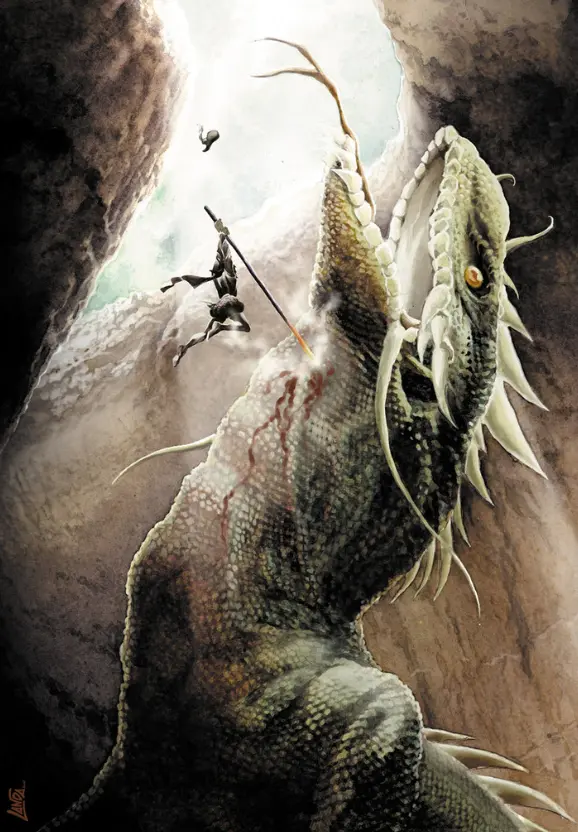
> Na koniec chciałbym zapytać: kim byłby dziś Juan Luis Landa, gdyby nie został artystą?
Juan Luis Landa: To bardzo ciekawe pytanie. Myślę, że zawsze byłem osobą ciekawą świata. Od dziecka pasjonowało mnie wiele rzeczy: archeologia, historia, przyroda, nauka, kino, muzyka. Gdybym nie był ilustratorem, pewnie rozwijałbym się w jednym z tych obszarów. Jednak praca ilustratora pozwoliła mi łączyć wiele z tych pasji w jednym – historię, archeologię, krajobrazy i „kino” poprzez komiks. Można powiedzieć, że nie zrezygnowałem z innych ścieżek, lecz znalazłem sposób, by je połączyć.
Na stronie można znaleźć również inne wywiady z twórcami komiksów – każda rozmowa to fascynująca podróż w świat rysunku i opowieści, którą warto przeczytać.
Worth reading:
 Kociołkowe rozmowy: Wywiad z Vincenzo Cucca – od Marvela do Kolonizacji.
 Kociołkowe rozmowy: Wywiad z Marcello Bondi – o Krainie Khora, mroku i włoskiej duszy komiksu.
 Cat talk: Interview with Michał Ambrzykowski – comic book cartoonist.
 Cat talk: Interview with Suzushiro, creator of Maid Skater manga.

